
NGO Reaching Zero-Dose Children held a three-day educational workshop entitled “Deepening Understanding of Global Issues and Envisioning the Future” at Ritsumeikan Uji Senior High School on September 5–6 (in person) and September 20 (online).The project brought together 20 high school students interested in global issues. Through lectures, discussions, and hands-on workshops, participants deepened their understanding of global health challenges and the issues surrounding zero-dose children.
Day 1: September 5 (Saturday)
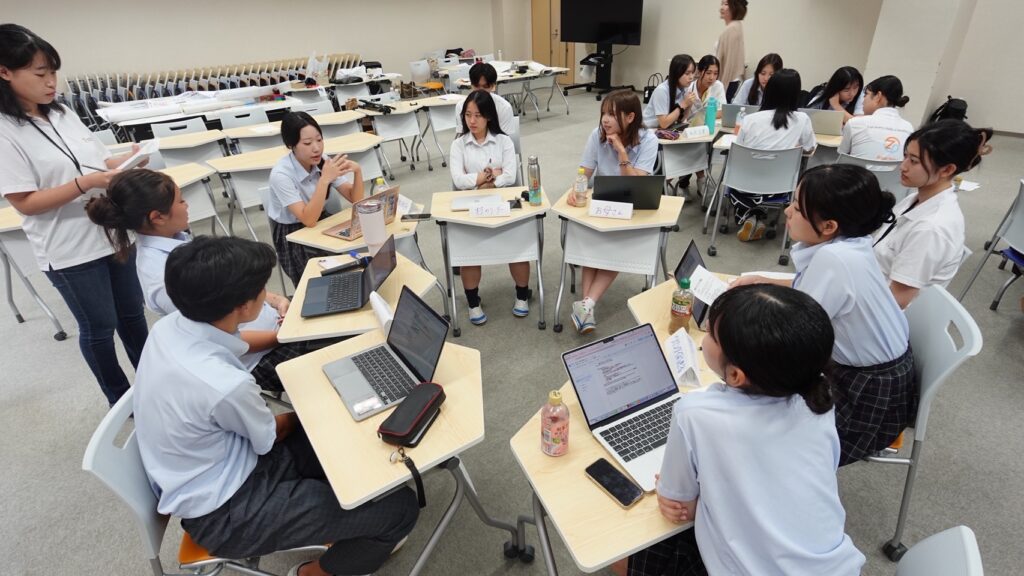
On the first day, participants exchanged ideas about the various global issues that exist around the world and explored how these issues are interconnected. Students were encouraged to freely identify global issues they were familiar with and discuss them in groups, discovering how seemingly separate problems are closely related. They also learned that challenges exist at different levels, ranging from individual circumstances to broader societal issues.
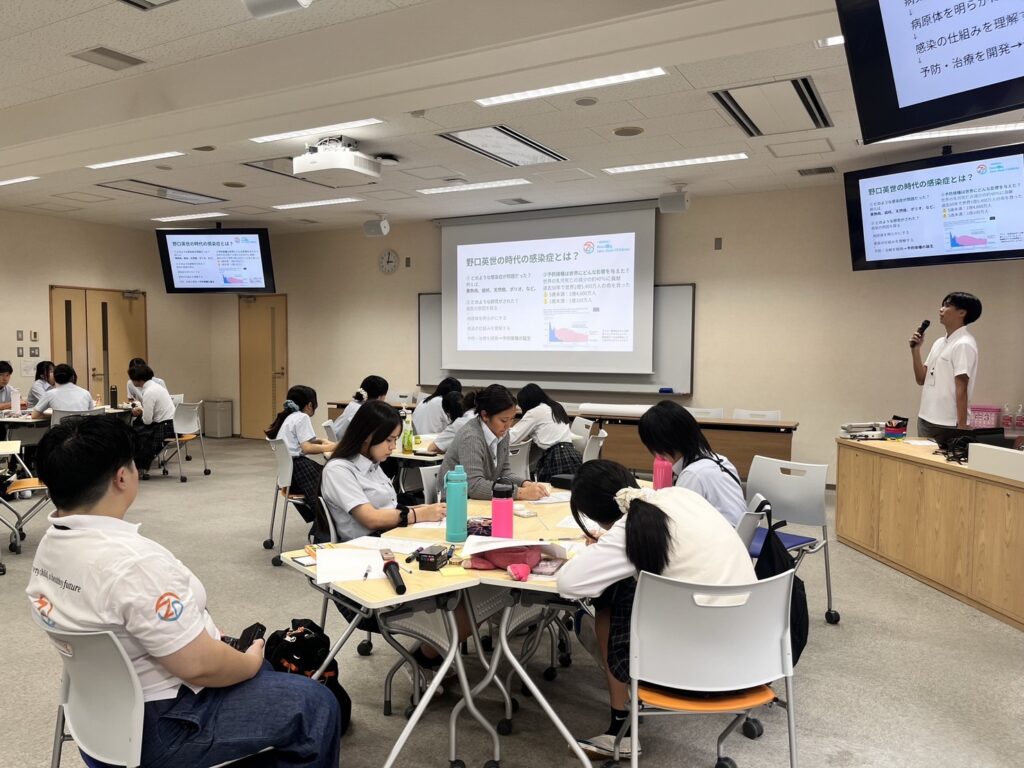
Next, Floret, a member of Reaching Zero-Dose Children, delivered a lecture on life in Ghana and galamsey, a form of illegal small-scale gold mining. Professor Nobutoshi Nawa of the Institute of Science Tokyo gave a lecture entitled “Mortality and Health Inequalities Among Young People Worldwide,” helping students gain a deeper understanding of the challenges affecting children’s health around the world. In addition, using fictional stories depicting children’s different backgrounds, participants explored the underlying causes of zero-dose children from multiple perspectives, including households, local communities, healthcare systems, and broader social structures.
Day 2: September 6 (Sunday)
On the second day, participants took part in a role-playing exercise and plenary discussion based on the situation in Gomba District, Uganda, where Toyota Tsusho Corporation conducts its field activities. Students assumed the roles of different stakeholders, including international organizations, private companies, the Ugandan government, and local residents of Gomba District, and engaged in discussions from their respective perspectives. While Uganda’s national BCG (tuberculosis) vaccination coverage stands at a high level of 98%, coverage in Gomba District is significantly lower, at 65%. Before the plenary discussion, each group identified and organized the underlying factors contributing to this disparity, including geographical conditions, infrastructure, and the healthcare system. They also explored how these factors interact with one another, documenting their findings on large sheets of paper. The discussion was initiated by a student playing the role of the WHO representative, who presented the agenda: “Introducing a Program to Increase BCG Vaccination Coverage in Gomba District.” Each stakeholder considered their own priorities, non-negotiable positions, and areas where compromise might be possible. Participants also held discussions and coordinated with stakeholders whose interests were closely aligned with their own, aiming to reach a consensus. Through this exercise, students experienced firsthand the complexity and difficulty of building consensus among stakeholders with different interests and priorities.
Participants reflected that behind a single issue lie far more interconnected factors than they had initially imagined, and that numerous barriers must be overcome to achieve meaningful solutions.
Online Exchange with Jack & Jill School: September 15 (Tuesday)
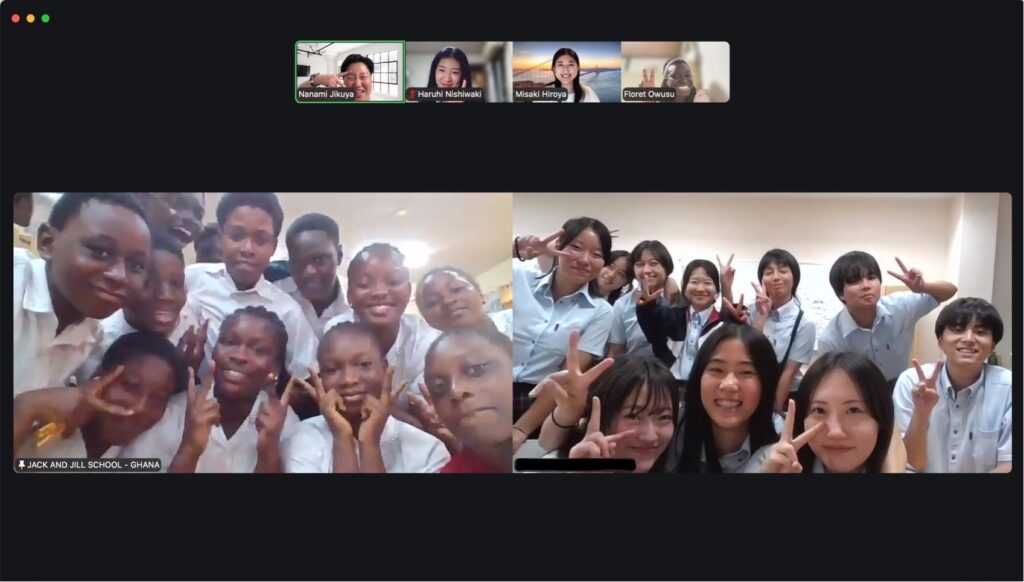
Between the second and third days of the workshop, participants held an online exchange with junior high school students from Ghana. Students shared their experiences of school life, discussed cultural differences, and exchanged perspectives on health-related challenges in their respective communities. Through direct dialogue with peers from a different country and cultural background, participants had the opportunity to develop a deeper understanding of global health and recognize these issues as something more immediate and relevant to their own lives.
Day 3: September 20 – Final Presentations
On the final day, participants presented their proposals as the culmination of the workshop. The theme was to develop solutions to challenges related to BCG (tuberculosis) vaccine supply and cold chain management in Gomba District, Uganda.
Using the SMART framework (Specific, Measurable, Achievable, Relevant, and Time-bound) as a guide, each team developed and presented its own proposals to address the complex challenges faced by local communities. These included securing reliable vaccine transportation methods, improving vaccine stock visibility, and reducing the workload of healthcare workers.
The final presentations were evaluated by four judges: Mr. Yuta Ohashi of Toyota Tsusho Corporation; Ms. Nahomi Kaneko, a former Japan Overseas Cooperation Volunteers (JOCV) member who currently works at the Japan International Cooperation Center (JICE); Ms. Aomi Katagiri, Representative Director of NGO Reaching Zero-Dose Children; and Floret, a Ghanaian member of NGO Reaching Zero-Dose Children.
The judges provided practical and valuable feedback, highlighting key considerations for sustainable implementation, including securing financial and human resources and building trust-based relationships with local communities. For the students, this was a valuable opportunity to reassess their proposed solutions from the perspective of real-world implementation and think more deeply about their feasibility and long-term sustainability.
We would like to express our sincere gratitude to all the students who participated with such enthusiasm, the teachers who supported the organization of the workshop, the experts who contributed their knowledge and feedback, and everyone who helped plan and implement this project. NGO Reaching Zero-Dose Children will continue working to raise awareness of global health challenges and empower the next generation to think critically and take action toward a world where every child has access to essential healthcare.